
The year 2026 has opened with continued strong momentum for China’s auto parts exports. According to the China Association of Automobile Manufacturers, auto parts exports reached USD 23.83 billion in Q1 2026 alone, up 3.7% year-on-year — outpacing the full-year growth rate of 2025. From January to May, cumulative exports surpassed USD 41.5 billion. At the same time, China’s complete vehicle exports are approaching the 8-million-unit milestone. Behind these numbers lies a powerful tailwind: every Chinese vehicle hitting overseas roads generates years of sustained aftermarket parts demand. For B2B auto parts companies, this is not merely a window of incremental opportunity — it is a systemic test of brand, trust, and channel capability.
Structural Opportunities in the Global Auto Parts Market

The global automotive aftermarket has already surpassed the trillion-dollar mark, and the shift toward online channels is accelerating. According to industry platforms such as eBay, global online auto parts sales are projected to reach USD 140 billion by 2027. North America, accounting for over 30% of the market, remains the cornerstone of China’s auto parts exports, while the Middle East, Southeast Asia, and Latin America — with their aging vehicle fleets and strong repair demand — are emerging as the fastest-growing growth engines.
Beneath the surface, however, buyer expectations are undergoing a subtle but critical evolution. Overseas B2B buyers — whether regional distributors, auto parts chain stores, or independent repair shops — are no longer fixated on unit price alone. They increasingly demand a reliable supply chain solution: accurate OEM/OE number matching, clear vehicle compatibility information, consistent delivery commitments, and the optimal balance between quality and cost. In short, the decision logic is shifting from “finding the cheapest part” to “finding a supplier worth partnering with for the long haul.”
From Price War to Value War: The Mandatory Lesson for Chinese Auto Parts Exports
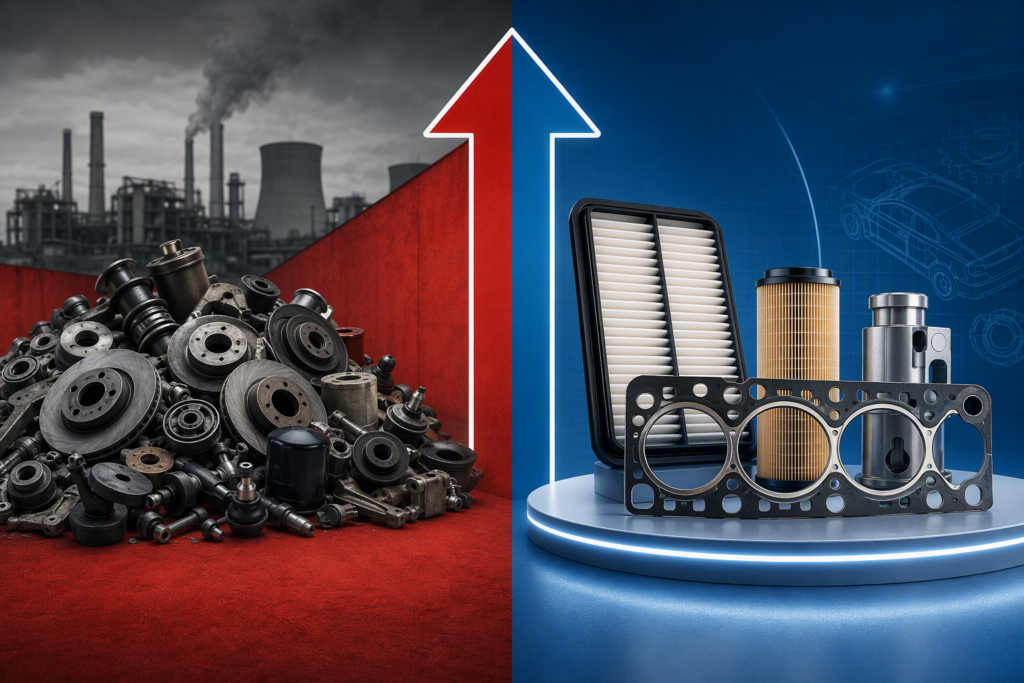
China’s auto parts export sector has long faced a stark competitive landscape: intense commoditization and relentless price wars among domestic peers, persistent cost pressure from Indian competitors with lower labor costs, and entrenched brand trust and premium pricing enjoyed by European and American incumbents. Caught in the middle, Chinese auto parts companies that compete on price alone will see their margins steadily squeezed into irrelevance.
The real path forward lies in differentiated value. Not a “parts bazaar” that sells everything, but deep specialization in specific vehicle platforms and product categories — so that when an overseas buyer needs a part for a particular model, you are the first name that comes to mind.
This is precisely the direction that BYWH (佰远威宏) has committed to.
LUGA: Differentiated Practice in B2B Auto Parts Going Global
As a B2B supplier deeply rooted in the auto parts export space, BYWH has focused on delivering high-quality replacement components to distributors and repair businesses worldwide. We understand that in B2B procurement, trust is the prerequisite for every transaction — and that trust must be built consistently across every link in the business chain.
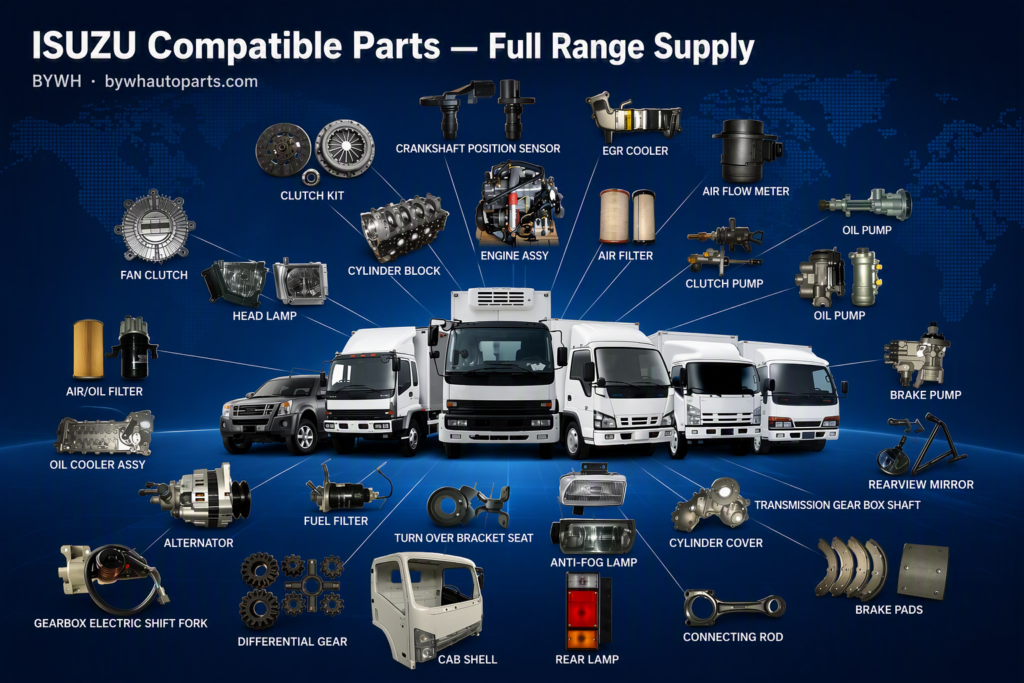
1. From per-piece quoting to one-stop solutions. We discourage buyers from falling into the trap of item-by-item price comparison. Through a regional agency model, BYWH provides partners with integrated procurement solutions spanning entire vehicle platforms — centered on the ISUZU lineup and covering critical engine-related components such as cylinder head gaskets, air filters, and other high-frequency replacement parts. A one-stop procurement experience translates into lower logistics coordination costs and a more stable supply chain relationship.
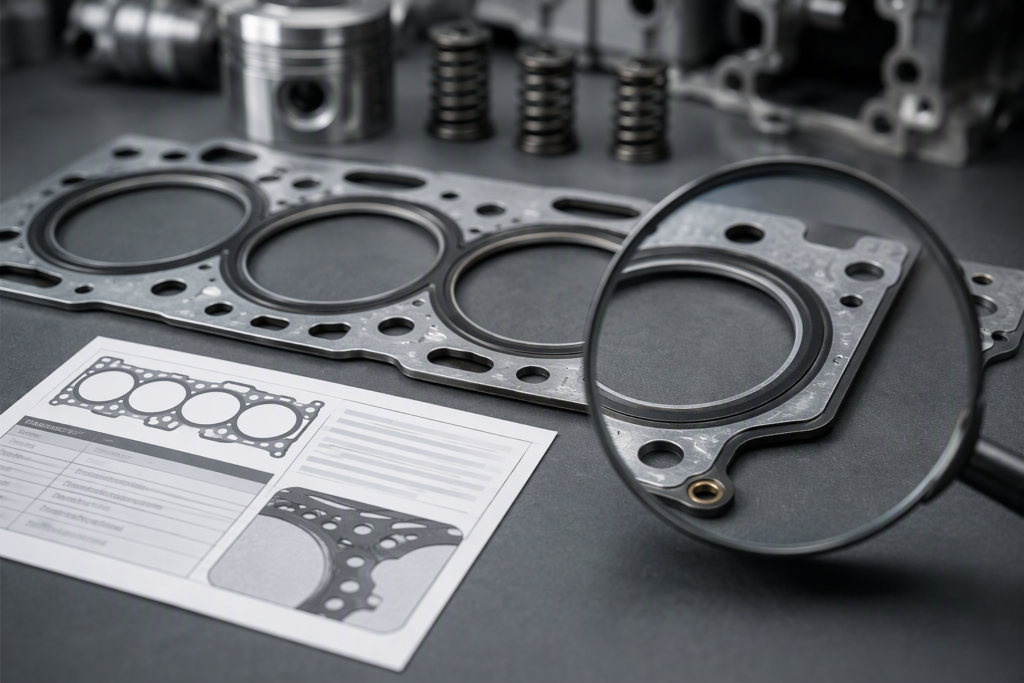
2. Precision data over vague promises. Every product ships with clear OEM/OE numbers and verified vehicle compatibility information. We know that for an overseas repair shop or distributor, a mismatched part is far more than a return — it means lost customers and reputational damage. That is why “precise matching” is our baseline delivery standard, not a value-added extra.
3. Building the LUGA brand. In the B2B space, a house brand means pricing power, channel control, and long-term brand equity accumulation. Positioned in the high-quality replacement parts market, LUGA offers overseas distributors a product line they can confidently stand behind — backed by a consistent quality control system and a 3-day dispatch commitment. A brand is more than a logo; it is a promise of quality consistency.
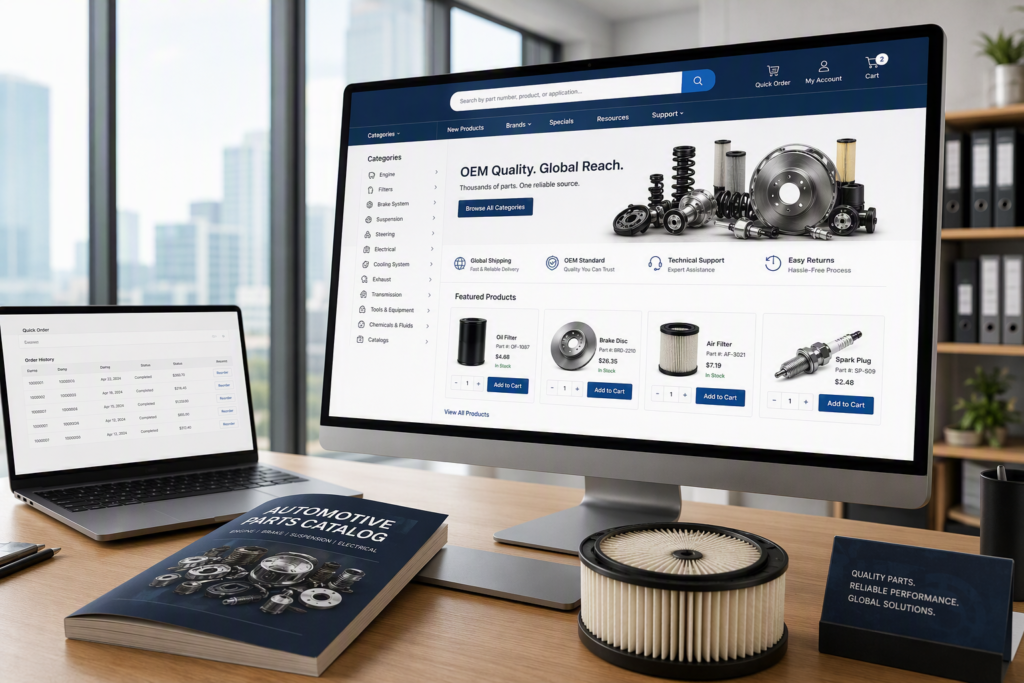
4. bywhautoparts.com — a proprietary platform for brand globalization. Amid continuously rising platform traffic costs, an independent website is the core infrastructure for B2B enterprises to build brand recognition and accumulate customer assets. Through bywhautoparts.com, global buyers can explore our full product range, look up OEM matching information, and submit customized procurement inquiries — all without being constrained by shifting platform policies. An independent website is more than a showroom; it is a critical link in the B2B trust chain. A professional corporate website, in itself, tells every buyer: “We are serious about this business.”
Outlook: Trust Is the Ultimate Currency in B2B Auto Parts
Going global in auto parts is not a sprint — it is a marathon. Price may earn the first click, but only quality, delivery reliability, and sustained service can turn a single transaction into a decade-long partnership. As Chinese vehicles become increasingly visible on roads worldwide, the global visibility of Chinese auto parts brands should rise in tandem.
The LUGA brand, under BYWH, will continue to anchor itself in precision matching, build its moat through one-stop supply, and expand its presence via the independent platform bywhautoparts.com — all in service of our global B2B partners. We believe that truly good business starts with one reliable part, delivered on time.

Visit bywhautoparts.com to learn more about LUGA’s full range of auto parts solutions.